
Year
2025
Principal Investigator
Location
Italy, IT
Abstract
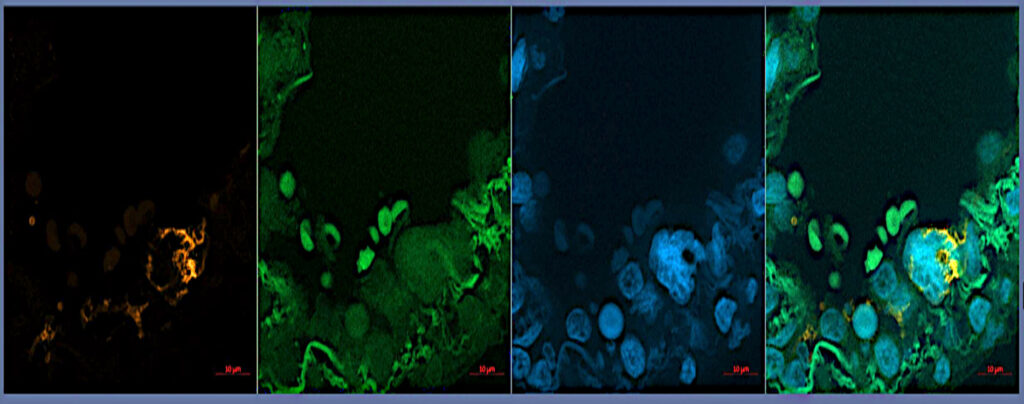
Myeloproliferative Neoplasms are caused by mutations in genes of the MPL/JAK2 axis (JAK2, MPL, and CALR) and progresses from a pre-fibrotic, where patients have minimal symptoms, to a fibrotic state, myelofibrosis, which is associated with increasing symptom burden leading to death in few years. Presently, myelofibrosis has limited treatment options. The disease is characterized by accumulation of atypical megakaryocytes with reduced GATA1 content and is phenocopied by mice carrying the Gata1low mutation which reduces the GATA1 content of the megakaryocytes This project will test the hypothesis that Gata1low megakaryocytes are major pathobiological players in myelofibrosis and that megakaryocyte-target therapies will cure the disease. We believe that, since fibrosis is associated with the end stage of all organ failure, studies on myelofibrosis may facilitate also addressing the clinical need of patients with fibrosis in other organs.
Objectives
- Objective 1 - This objective is based on a paradigm shift of our understanding of megakaryocytopoiesis which indicates the existence of three different megakaryocyte populations. In addition to the morphologically mature megakaryocytes which produce platelets, there are two different megakaryocyte populations: one which exert immune functions, and another one which supports the hematopoietic stem cells. These populations are altered in the bone marrow from patients with myelofibrosis and Gata1low mice. Here, we will investigate changes in megakaryocyte lineages by leveraging confocal microscopy, time-lapse of live cells and scRNA-seq information on megakaryocytes subsets from animal models and patients at early- and late-stages of myelofibrosis.
- Objective 2 – For reason still unknown, the TGF-β trap AVID200 was effective only in a subset of myelofibrosis patients. Here we will provide mechanistic investigation of the mechanism(s) which provide resistance to TGF-β inhibition to the malignant hematopoietic stem cells, giving to these cells a proliferative advantage under conditions of high TGF-β.
- Objective 3 – There is a strong rationale to hypothesize that restoration of the GATA1 content in megakaryocytes will cure myelofibrosis. In particular: a) megakaryocyte-specific driver mutations induce myelofibrosis in mice in the presence of healthy stem cells; b) megakaryocytes from myelofibrosis patients and from driver mutation mouse models have reduced level of GATA1; c) mice carrying the Gata1low mutation which reduces the expression of the gene in megakaryocytes develop myelofibrosis with age; d) Gata1low mice carrying the hGATA1 transgene that increases the expression of GATA1 in a subpopulation of megakaryocytes do not develop myelofibrosis. Here, we will test whether biofunctionalized GATA1-mRNA-charged nanoparticles will cure myelofibrosis in mouse models and, eventually in patients.
National Collaborators
- Dr. Francesco De Nuccio, TRDb, Department of Experimental Medicine, University UniSalento. Scientific director of the Animal Facility of the University of Salento, Lecce.
- Dr. Mario Falchi, Investigator, Dr. Orietta Picconi, Biostatistician, Dr. Fabrizio Martelli, Senior technologist, Istituto Superiore di Sanità, Rome.
- Dr. Alessandro Maria Vannucchi, Director, Department on Oncology, Careggi University Hospital, Florence
- Dr. Vittorio Rosti, Director, Center for the Study and Therapy of Myelofibroliferative Diseases, Pavia.
- Dr. Alessandra Balduini, Professor, Department of Molecular medicine, University of Pavia.
- Dr. Marcello Allegretti, Scientific Director, Dompè Pharmaceutical, Aquila.
- Dr. Antonello Mai, Professor, Department of Pharmaceutical Chemistry and Technology, University La Sapienza, Rome.
International external collaborators
- Dr. John Stamatoyannopoulos, Director, Altius Institute for Biomedical Research, Seattle, Wa, USA
- Dr. Ronald Hoffman, Albert A. and Vera G. List Professor of Medicine, Director Myeloproliferative Disorders Research Program, Tisch Cancer Institute, Icahn School of Medicine at Mount Sinai, New York, NY, USA
- Dr. John Crispino, Member, St. Jude Faculty, Director, Division of Experimental Hematology, Wall Street Committee Endowed Chair, St Jude Children’s Research Hospital, Memphis, TN, USA
- Dr. Ross Levine, Senior Vice President, Memorial Hospital, Translational Research, Memorial Sloan Kettering Cancer Center, New York, NY, USA
Key 5 publications
- 1. Migliaccio AR, et al. (2021), An Outline of the Outset of Thrombopoiesis in Human Embryos At Last, Cell Stem Cell, Volume 28, Issue 3, PMID: 33667354, https://doi.org/10.1016/j.stem.2021.02.007
- 2. Verachi P, et al., (2022). The CXCR1/CXCR2 Inhibitor Reparixin Alters the Development of Myelofibrosis in the Gata1low Mice. Frontiers in oncology, 12, 853484. PMID: 35392239, PMCID: PMC8982152, https://doi.org/10.3389/fonc.2022.853484
- 3. Mascarenhas J et al., (2023). A Phase 1b trial of AVID200, a TGFβ 1/3 trap, in patients with myelofibrosis. Clin Cancer Res.; 15;29(18):3622-3632. doi: 10.1158/1078-0432.CCR-23-0276
- 4. Gobbo F et al., (2023) GATA1-defective immune-megakaryocytes as possible drivers of idiopathic pulmonary fibrosis. bioRxiv [Preprint].. doi: 10.1101/2023.06.20.542249.PMID: 37425686
- 5. Varricchio L et al., (2023) Patients with hypercortisolemic Cushing disease possess a distinct class of hematopoietic progenitor cells leading to erythrocytosis. Haematologica. 1;108(4):1053-1067. doi: 10.3324/haematol.2021.280542. PMID: 35861015; PMCID: PMC10071118
People
- Gregorio Polo
- Alessandra Locorotondo
