
Year
2025
Principal investigator
Platform
Location
Italy, IT
Abstract
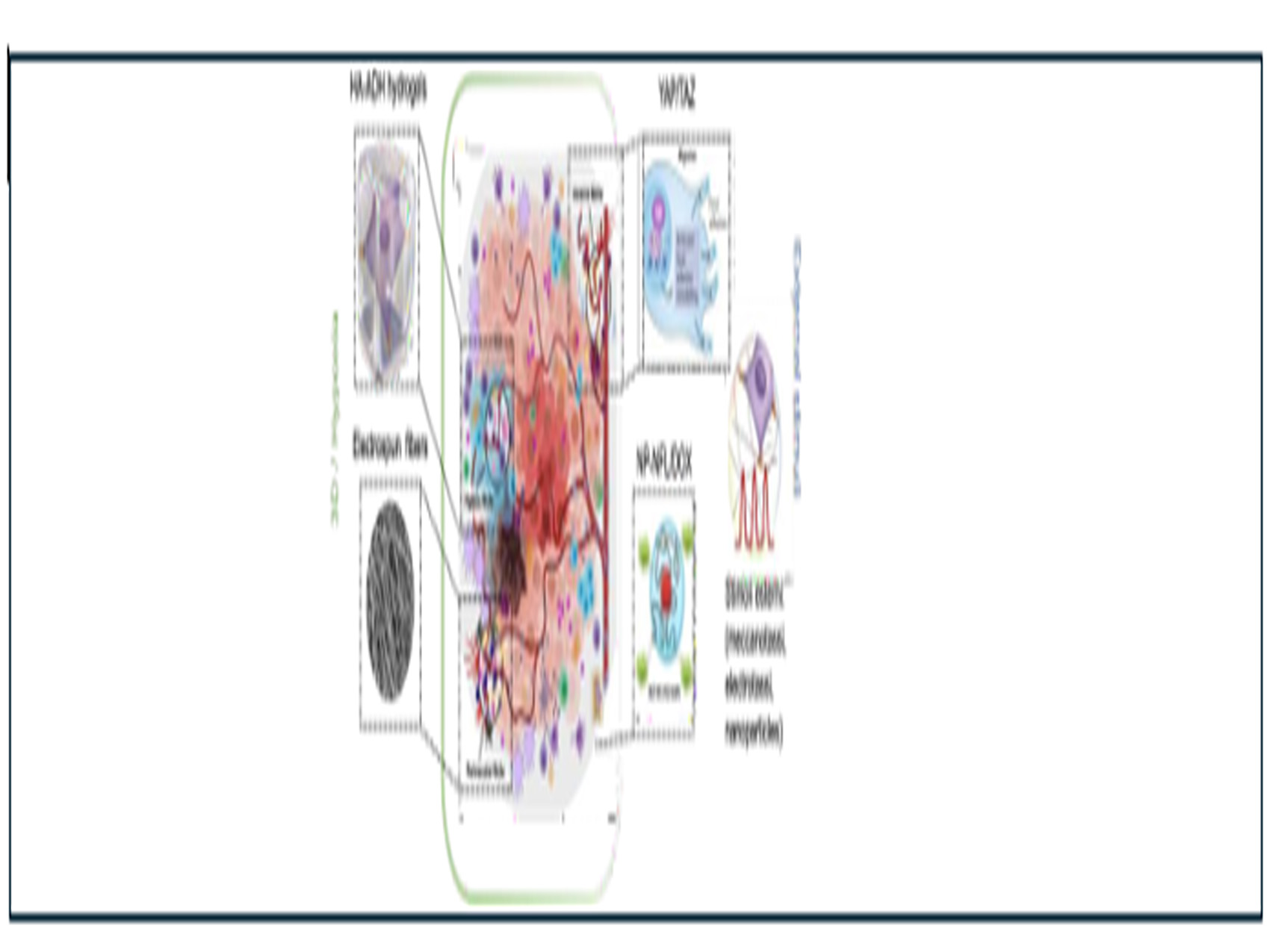
This project aims to address the high invasiveness of glioblastoma (GBM), the most aggressive of brain tumours, by exploring how the tumour microenvironment—including extracellular matrix (ECM) cues and electric fields (EFs)—regulates GBM cell migration and survival. GBM's diffuse spread and glioblastoma stem cells (GSCs) persistence in various tumour niches hinder effective treatment. The project integrates advanced 3D bioengineered platforms to mimic perivascular, vascular-invasive, and hypoxic niches and investigates the mechanistic roles of EFs and matrix stiffness on GBM behaviour. Key innovations include modulating stiffness and EF cues to influence directional migration (electrotaxis), actin anchorage, nuclear volume, YAP signalling and hypoxia. The findings uncover new mechanistic insights into hypoxia/YAP’s role in mechanosensing and electrotactic response. The ultimate goal is to integrate electrotactic guidance with minimally invasive therapies for targeted GBM cell eradication, providing a novel preclinical platform to test therapeutics and improve GBM patient outcomes.
Objectives
- [Objective 1] - Elucidate the molecular mechanisms, particularly YAP/hypoxia-mediated mechanotransduction, underpinning glioblastoma response to biomechanical and electrotactic cues for targeted cell entrapment and ablation.
- [Objective 2] - Investigate the synergistic role of extracellular matrix stiffness and electric fields in regulating glioblastoma cell migration, polarity, and cytoskeletal organisation.
- [Objective 3] - Develop and optimise 3D bioengineered platforms that mimic the spatial and physical characteristics of GBM tumour niches to study tumour invasion and therapeutic resistance.
Collaborators
- Prof. Moroni Lorenzo (Maastricht University)
- Prof. Rizzi Roberto (Sapienza University)
Key 5 publications
- 1. Basilico B., Grieco M., D'Amone S., Lauro C., Mozetic P., Rainer A., de Panfilis S., de Turris V., Gigli G., Cortese B., YAP/TAZ cytoskeletal remodelling is driven by mechanotactic and electrotactic cues. Materials Advances. 2025, 6, 248 - 262. https://doi.org/10.1039/D4MA00891J
- 2. Castillo C., Grieco M., D'Amone S., Lolli M.G., Ursini O., Cortese B., Hypoxia effects on glioblastoma progression through YAP/TAZ pathway regulation, Cancer Lett. 2024; 588:216792. doi: 10.1016/j.canlet.2024.216792.
- 3. Grieco M, Ursini O, Palamà IE, Gigli G, Moroni L, Cortese B. HYDRHA: Hydrogels of hyaluronic acid. New biomedical approaches in cancer, neurodegenerative diseases, and tissue engineering. Mater Today Bio. 2022;17:100453. doi: 10.1016/j.mtbio.2022.100453.
- 4. Basilico B, Palamà IE, D'Amone S, Lauro C, Rosito M, Grieco M, Ratano P, Cordella F, Sanchini C, Di Angelantonio S, Ragozzino D, Cascione M, Gigli G, Cortese B. Substrate stiffness effect on molecular crosstalk of epithelial-mesenchymal transition mediators of human glioblastoma cells. Front Oncol. 2022; 12:983507. doi: 10.3389/fonc.2022.983507
- 5. Palamà IE, D'Amone S, Ratano P, Donatelli A, Liscio A, Antonacci G, Testini M, Di Angelantonio S, Ragozzino D, Cortese B. Mechanical Durotactic Environment Enhances Specific Glioblastoma Cell Responses. Cancers (Basel). 2019;11(5):643. doi: 10.3390/cancers11050643.
People
- Ornella Ursini
- Roberta Grillo
- Martina Lamacchia
